Mini loaves in a muffin tin
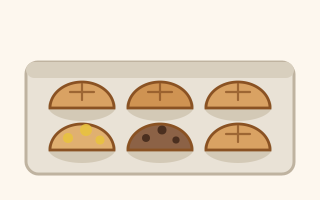
One batch of dough, twelve small loaves, and as many different flavours as you fancy. More crust per bite than a big loaf, and the best way to test a flavour idea before committing a whole bake to it.
Needs active starterCollected
Why bother
Because a flavour idea that turns out badly costs you two rolls instead of a whole loaf you then have to eat for a week. Make a tray, try five things at once, and only commit a full loaf to the ones that earned it.
Dough
| Ingredient | Amount |
|---|---|
| Bread flour | 600 g |
| Water | 420 g |
| Active starter, at peak | 120 g |
| Fine sea salt | 13 g |
Makes about 1.15 kg of dough - twelve loaves of roughly 95 g, or eight larger rolls of about 140 g.
Timeline
| Time | What |
|---|---|
| 6.00 pm | Whisk starter into water, add flour and salt, mix |
| 6.30 pm | Stretch and fold, set 1 |
| 7.00 pm | Set 2 |
| 7.30 pm | Set 3 |
| 7.30-10.30 pm | Bulk ferment until puffy, jiggly and bubbled |
| 10.30 pm | Divide, add flavourings, shape into tight balls |
| 11.00 pm | Into a greased muffin tin, covered, into the fridge |
| Next day | Bake straight from the fridge |
A cool kitchen stretches the bulk ferment considerably. Go by the dough, not the clock - see the method.
Flavours
Amounts are per two rolls, about 190 g of dough.
| Flavour | Add |
|---|---|
| Garlic parmesan | 25 g grated parmesan, ½ tsp garlic powder, 1 tsp chopped parsley |
| Rosemary parmesan | 20 g grated parmesan, 1 tsp chopped rosemary, black pepper |
| Italian herb and cheese | 20 g mozzarella or provolone, 1 tsp mixed dried herbs, a pinch of garlic powder |
| Olive and herb | 30-40 g chopped olives, 1 tsp mixed herbs, a pinch of garlic powder |
| Chocolate | 25 g chocolate chips, 1 tsp cocoa, 1 tbsp soft brown sugar |
How to add them: flatten each piece of dough into a rough rectangle, scatter the flavouring over it, fold it over itself several times to spread it through, then shape into a tight ball.
Shaping and proofing
- Divide the bulk-fermented dough into 12 pieces of about 95 g.
- Add the flavourings and shape each into a tight ball.
- Sit them seam side down in a greased muffin tin, or in paper liners.
- Cover and refrigerate 12 to 18 hours, up to 24.
Baking
- Heat the oven to 230 °C / 450 °F with a baking stone or heavy tray inside.
- Score the tops and bake straight from the fridge.
- 20 to 25 minutes for 95 g loaves, 25 to 30 for 140 g ones.
- Done at an internal temperature of 96-99 °C / 205-210 °F.
- Cool on a wire rack for at least 30 minutes.
Crusty on every side
Clamp a second muffin tin upside down over the first for the first 15 minutes, then uncover and finish. It traps steam exactly the way the lid on a pot does, and you get a crisp shell the whole way round.
Keeping them
Airtight for 2 to 3 days, or frozen. Five to eight minutes at 175 °C brings them back to something very close to fresh.
Collected, not yet baked by me
This one came from a baker I trust and is rewritten here in metric and plain language, but it is still on my own to-bake list. The method is sound; the exact timings are the bit I have not personally checked. Watch the dough rather than the clock, and tell me how it went so I can correct it.